
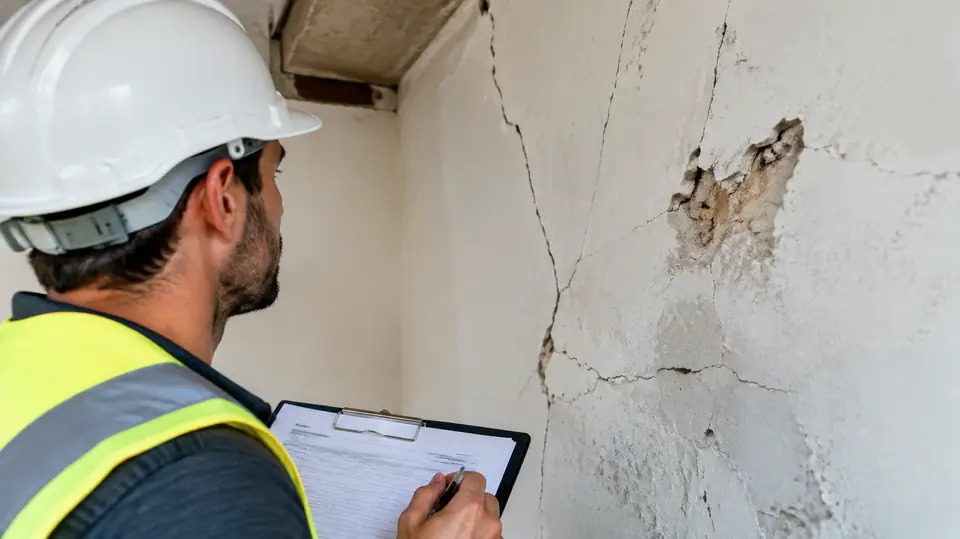
Construction defects in new apartments
Dampness, cracks, tiling or departures from the specification? The law sets clear periods – and buyers who act correctly and on time obtain repairs or compensation.
What counts as a construction defect ("non-conformity")?
As construction defect lawyers in Israel, we bring defect claims against developers for buyers and condominium committees: dampness and leaks, cracks, waterproofing, flooring, aluminium works and departures from the specification – every case built on an engineer's report and the deadlines of the Sale (Apartments) Law.
The seller is in breach when the apartment differs from the specification, an official standard or the building regulations, or when a non-conformity appears within the statutory periods. A seller who failed to provide a specification is deemed to have undertaken high quality, and bears the burden of proof (s. 5).
Inspection and warranty periods
The inspection period starts at handover; within it, the developer is liable unless it proves the buyer caused the defect. The warranty period – three further years – requires the buyer to prove the defect originates in design, workmanship or materials.
| Type of defect | Inspection period |
|---|---|
| Any other non-conformity | 1 year |
| Joinery and frames (incl. aluminium); interior tiling and cladding | 2 years |
| Machinery and boilers; yard development; thermal insulation | 3 years |
| Plumbing (incl. leaks); waterproofing of the structure | 4 years |
| Cracks wider than 1.5 mm in non-load-bearing elements | 5 years |
| Detachment or peeling of exterior cladding | 7 years |
| Fundamental non-conformity (structure, stability, safety) | 20 years |
Source: Sale (Apartments) Law, ss. 4, 4A and Schedule.
Notice deadlines
- A defect discoverable on reasonable inspection at handover – notify the developer within one year.
- A latent defect – notify within a reasonable time of discovery.
The developer's right to repair – and when it ends
Under section 4B the buyer must give the developer a fair opportunity to repair, and the developer must repair within a reasonable time. If the defect recurs after one or more repairs within two years of notice, or an urgent repair is not done in time, the buyer may repair and charge the developer. Case law also recognises situations where monetary compensation replaces repair.
Maintenance instructions and common property
The developer must deliver signed maintenance and use instructions; failure is itself a non-conformity (s. 4(a)(6)). A clause preventing residents from replacing a management company appointed by the developer is unenforceable beyond three years (s. 6A).
Building a defects claim
- Engineer's report with photographs, standards and cost estimates.
- Notice and demand, giving the developer an opportunity to repair.
- Documenting what was and was not repaired.
- Claim – usually in the Magistrates' Court, which typically appoints its own expert.
- Common-property defects – handled jointly through the condominium committee.